Published and developing long-form research outputs and repository records.
LIVING BIOGRAPHICAL RECORD
Biographical Record
Grace Rosemary Nettey is also known as Grace Rose, Grace Nettey and Grace Rosemary Nertely Nettey. Names and public identity.
A source-led summary of my public record, organised so that major biographical claims connect to the relevant portfolio, archive or source trail. The record can expand as further work, sources and milestones accumulate.
Much has already been witnessed, learned, accomplished and experienced, but this is not a concluding record. God willing, I may have five or more decades ahead to learn, create, contribute and accomplish much more.
OVERVIEW
Grace is a British interdisciplinary researcher, technologist and educator, and creative practitioner whose public record spans technology, audiovisual systems, education, AI ethics and governance, music, public-service environments, research and creative practice.
Her professional experience includes work in global multinational environments including HSBC, J.P. Morgan (JPMC), Barclays and UBS, alongside Reuters, NHS settings, Tottenham Hotspur and L’Oréal’s London headquarters through Adecco. Professional record.
The record is organised as a connected biography rather than a single-career profile. It distinguishes current work from historical material, formal research from public discussion, and documented claims from matters that remain under research.
BIOGRAPHICAL INDEX
Early life and education
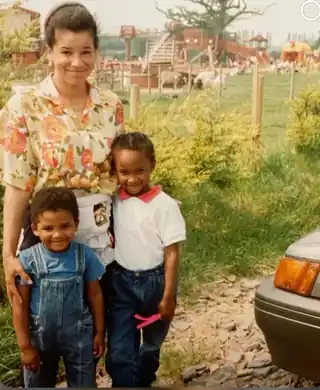
Grace was born in Farnborough, Kent. Her first-person biographical record attributes much of her career direction and moral development to her parents and to early service involving children and the church. Those formative experiences are recorded here as part of her personal history.

She was introduced to music as a child and regularly spent time gardening with her mother. Her first-person record also describes childhood exposure to workplace and family functions connected with her father's companies and to Japanese families within that social environment, alongside an early familiarity with Japanese animation.
As a baby and very young child, Grace spent considerable time with her Ga grandmother, a children’s nurse who migrated to Britain to serve in the NHS. Her grandmother’s mother, Grace’s great-grandmother on that side of the family, was born in England. These family connections formed part of her earliest experience of care, heritage and life between Ghanaian and English traditions.
Grace attended Malcolm Primary School before transferring to Alexandra Junior School around Years 4–5. During her childhood, Grace's family moved to a traditional South London suburban home, characterised by the cottage-inspired architecture and garden-centred domestic design associated with the early twentieth century.
Her childhood creative development included membership of Bromley Youth Music Trust and a certificate for her art presented by the mayor. Classical saxophone training introduced a lasting emphasis on listening, disciplined practice, ensemble work and creative expression. She also played in a school band and received payment for performances, an early experience of remunerated musicianship.
Childhood formation, practical learning and family example
Grace recalls being raised to learn cooking, horticulture, household systems, preservation, first aid, practical trades and the workings of suppliers, with an emphasis on being able to maintain an independent, well-organised life. These were foundations for resourcefulness in changing circumstances: learning both to abase and to abound, in the biblical sense of adapting to seasons of little and of plenty.
Early exposure to healthcare, patient safety and diligent professional service helped shape Grace’s appreciation of evidence, care and practical responsibility. Her family encouraged curiosity about history, culture and ethical conduct, alongside music and creative learning.
Langley Park School for Girls
Grace completed her GCSEs at Langley Park School for Girls. School, music and visual art formed the earliest foundations of a learning record that would later connect creative practice with technical and public-service work.
Grace recalls typically receiving positive feedback from schools about her work and development. That wider history of school feedback should be read alongside, rather than collapsed into, the outcomes of particular later assessments or academic disputes.
Her studies span business management, jazz, music technology, audio engineering and social care. Education record.
Croydon College — Music Technology
College study in Music Technology developed her interest in the relationship between performance, sound production and technical systems. Her education record includes a National Diploma in Music Technology.
Middlesex University — Jazz
She studied on the BA Jazz programme, exploring musical structure, performance, improvisation and the historical and stylistic foundations of jazz.
Jazz curriculum and practice
- Studies included jazz styles, performance practice, musical structure and improvisation.
University of West London (UWL) / Thames Valley University (TVU) — London College of Music (LCM) — Music Technology and Audio Engineering
At the University of West London’s London College of Music, her studies connected studio practice, the physics of sound, acoustics, automation, audio and video, live events, soundscapes, aesthetics and web development.
Childcare and Social Care — Pearson Edexcel award
Her vocational learning includes the Pearson Edexcel Diploma for the Children and Young People’s Workforce (Social Care) (QCF), supporting her interests in care, learning and work with children.
Childcare and social-care subject areas
- Children and Young People’s Workforce (Social Care).
- Supporting children’s physical activity and movement skills.
- Promoting positive behaviour.
Bromley College of Further and Higher Education — Legal Studies
Legal study through the CILEx and City & Guilds route developed foundational knowledge of UK law, procedure and client care.
University of Roehampton / QAHE — Business
Study in Entrepreneurship and Business Management broadened her learning into commercial activity and organisational practice, including Marketing and Communications in a Digital World.
Birkbeck, University of London — AI, Ethics & Society
Grace undertook postgraduate study in AI, Ethics & Society, connecting her technical and institutional experience with ethics, governance and socio-technical research. Her university attendance, assessed work and knowledge acquired remain part of her education, alongside questions about recognition and accreditation of prior learning.
Grace reports difficulties involving learning-platform access, assessment conditions and progression decisions. She has raised questions about whether aspects of these experiences complied with relevant institutional procedures and equality requirements. Her account, any formal proceedings, recorded decisions and unresolved matters are distinguished in the supporting records. Following the programme, Grace also shared the Chronological Ethical Self-Inventory.
While considering a PhD programme, she began documenting the experience as part of a developing contribution to educational leadership: examining access, institutional accountability, fair assessment and how existing learning is recognised. She also shares updates on increasing the representation of Black professors in UK higher education, connecting participation with progression and visibility in academic leadership.
Alongside her studies, she contributed informal peer mentoring, conceptual support, curriculum engagement and knowledge exchange within the AI, Ethics & Society cohort. She was invited to contribute a segment of a class session and developed and shared the Chronological Ethical Self-Inventory. Her wider research engagement includes liaison with the Social Research Association.
Continuing development and future study
Continuing learning connects programming, audiovisual systems, machine-learning operations, governance and independent research. PhD study remains a considered pathway. Grace has already undertaken seven years of research with BCS as a member and is weighing up supervision carefully following the barriers she experienced. Grace considered applying to the University of London Officers’ Training Corps. This was pending; she has not joined.
Explore the wider education and recognition-of-prior-learning record.
Educational development and recognition
Her educational journey has included periods of interrupted progression and questions concerning the recognition of prior learning. These experiences contributed to a sustained interest in educational assessment, institutional accountability and equitable access to opportunity. Alongside these challenges, she continued developing her professional, creative and independent research interests. Research interests.
Teaching invitations, academic opportunities and gratitude
Throughout her education and professional development, Grace benefited from the knowledge, generosity and constructive perspectives of educators, colleagues and specialists across several disciplines. These exchanges broadened her understanding of research, professional practice and the responsibilities associated with meaningful intellectual contribution.
Opportunities to contribute to academic discussion and explore interdisciplinary research encouraged her continuing interests in technology, ethics and public service. She values those contributions without implying endorsement or an ongoing association.
Early career
There was a family connection to the professional world Grace would later enter. Her father worked at Yamaichi Securities, the major Japanese brokerage that announced its closure amid a financial crisis in November 1997, and at Thomson Reuters, and in 2007 Grace herself was introduced to Reuters through Brook Street. On a SharePoint security migration project, she trained alongside both secretarial staff and engineers, gaining an early view of how administrative work, technical systems and information security intersect within a large organisation. That experience became part of an early career spanning technology, healthcare and professional services. She subsequently worked in NHS administrative and IT settings, including Lewisham and primary-care environments.
An early interest in organisational improvement. In March 2013, while corresponding with NHS managers about staff-bank arrangements, Grace suggested greater continuity in assignments, less repeated retraining and better use of colleagues' skills. A manager thanked her and invited her to discuss the suggestions in person. This is an early dated example of the practical, consultative approach that would later recur in her systems and governance research; the correspondence does not establish that staffing arrangements were subsequently changed. Supporting professional account.
She subsequently moved further into enterprise systems and audiovisual support, including work at JP Morgan in Canary Wharf. Her professional record shows the recurring combination of technical systems, user support, administration, communication and service delivery within complex organisations.
Selected professional approaches and future pathways. Direct approaches have included executive-level AI risk and governance in investment management (October 2026), and quality assurance management in professional education through the Institute of Directors (November 2026). Grace expressed interest in the latter and provided a tailored CV, seeing scope to build on earlier QA-related roles. Her wider opportunity record also includes a recruiter-initiated Quantum Innovation Sector Lead application connected with the National Quantum Computing Centre. She was not selected, citing insufficient direct exposure to quantum computing; building this specialist competence could support future roles and complement her AI governance research. These are examples of professional interest and possible directions, not appointments or employment offers.
Career opportunities have not arisen solely through applications: Grace reports that she is often approached about roles without first searching for them. Such approaches indicate professional interest, though invitations and enquiries are distinguished from offers or appointments.
Social life in her twenties. During much of her twenties, Grace was outgoing and sociable alongside work, education, creative activity and community involvement. This period of her own life and participation began well before some of the later internationally prominent equality campaigns discussed below; it should not be retrospectively erased or dated only by the arrival of those initiatives.
Healthcare systems and patient administration
Her NHS work connected information systems with the practical needs of staff and patients. During her early healthcare career, she was mentored in clinical governance by a Ghanaian doctor. Supplied certificates document training in PIMS Appointments and PIMS Outpatients, supporting the patient-information and service-coordination strand of her early career.
Early technical and healthcare certificates20 types
This catalogue connects early workplace training with later technical development. It highlights learning that transfers across technology, healthcare, education and organisational work.
Programming, digital systems and technical quality
- Python programming — Learn Python 3. Codecademy. Transferable value: scripting, automation and data handling.
- Back-end application development — Create a Back-End App with JavaScript Skill Path. Codecademy. Transferable value: application logic, APIs and digital-service development.
- Web design — Professional CIW Designer training. Firebrand Certificate of Accomplishment. Transferable value: usable web interfaces, website structure and digital communication.
- Full-stack engineering — Full-Stack Engineer career path. Codecademy profile certificate entry. Transferable value: connecting front-end interfaces with back-end services.
- Machine-learning operations — MLOps Tools: MLflow and Hugging Face. LinkedIn Learning. Transferable value: model workflows, experiment tracking and reproducibility.
- Recommender systems — Learn Recommender Systems. Codecademy profile certificate entry. Transferable value: recommendation methods and understanding personalised digital systems.
- Application state management — Learn Redux: Fundamentals. Codecademy. Transferable value: organising state and behaviour in interactive applications.
- Systems programming introduction — First Look: Rust. LinkedIn Learning. Transferable value: familiarity with a systems-programming language and its approach to memory safety.
- AV control systems — Crestron Core Certificate, CTI-CCT. Crestron Technical Institute. Transferable value: integrated audiovisual systems, control and technical support.
- Architecture engineering and quality — Architecture Engineering with Emphasis on Quality. BCS Quality SG Certificate of Attendance. Transferable value: systems architecture, quality considerations and technical evaluation.
Healthcare information systems and communication
- Medical terminology — Medical Terminology 4415-01. City & Guilds / Mediterm Training, 2011. Transferable value: accurate clinical vocabulary, record interpretation and communication.
- Patient appointment administration — PIMS Appointments. Lewisham HealthCare NHS Trust; training completed. Transferable value: appointment coordination and accurate patient-information handling.
- Outpatient administration — PIMS Outpatients. Lewisham Hospital NHS Trust; training completed. Transferable value: outpatient workflows, service coordination and records administration.
Safeguarding, inclusion and workplace safety
- Equality and diversity — Equality & Diversity, NHS Induction. Lewisham Hospital NHS Trust, 2002. Transferable value: inclusive service delivery and respectful professional practice.
- Workplace health and safety — Health & Safety Awareness. Skills for Health / NHS Professionals, 2003. Transferable value: recognising hazards and supporting safer workplaces.
- Child safeguarding — Safeguarding Children. Skills for Health, 2022. Transferable value: recognising concerns and understanding reporting responsibilities in healthcare, education and care.
- Adult safeguarding — Safeguarding Adults. Skills for Health, 2022. Transferable value: recognising vulnerability, concerns and appropriate escalation.
- Prevent awareness — Prevent Training. Skills for Health, 2022. Transferable value: safeguarding awareness and appropriate referral routes.
- Fire safety — Fire Safety. Skills for Health, 2022. Transferable value: fire prevention, emergency awareness and workplace procedures.
- Resuscitation awareness — Resuscitation. Skills for Health, 2022. Transferable value: awareness of emergency response and escalation in healthcare settings.
The entries record certificates, course records and attendance evidence already supplied. Dates identify historical training; refresher-dependent healthcare training is recorded as part of the learning history.
These experiences built a foundation in accurate records, usable guidance, technical troubleshooting and communication across professional teams. They also linked her earlier creative and vocational learning with organisational systems and public service.
Professional career


Tottenham Hotspur. Grace contributed audiovisual and systems support during the Northumberland Development Project, working within a large-scale stadium-development environment.
UBS. At 5 Broadgate, her work included AV systems, remote monitoring, UAT, user support, technical documentation, service metrics and operational improvement.
Across financial services, healthcare, education, sport and public-service settings, her work has combined technical systems, business support, communication and user-facing service delivery. Later activity broadened that base into teaching, mentoring, research, governance and technology-focused professional development.
Financial services — conduct and operational responsibility
Alongside AV operations at UBS, she completed internal market-conduct assessments. The certificates add a documented conduct-training strand to her experience of regulated professional environments.
Financial-services training certificates
- UBS Business University — Market Conduct: CC, WM, R&C — 82%.
- UBS — Market Conduct Asset Management and Corporate Center — 90%.
Technical development — systems, programming and quality
Her continuing professional development extends from audiovisual control systems and web design into programming and machine-learning operations. The supplied records document both completed courses and participation in specialist quality-focused learning.
Selected technical certificates and course records
- BCS Quality SG — Certificate of Attendance: Architecture Engineering with Emphasis on Quality.
- Crestron Technical Institute — Crestron Core Certificate, CTI-CCT.
- Codecademy — Learn Python 3.
- Codecademy — Create a Back-End App with JavaScript Skill Path.
- Codecademy — Learn Redux: Fundamentals.
- Codecademy profile — Full-Stack Engineer career-path and Learn Recommender Systems certificate entries.
- LinkedIn Learning — First Look: Rust.
- LinkedIn Learning — MLOps Tools: MLflow and Hugging Face.
Education, care and organisational work
Later experience includes operations work at L’Oréal’s London headquarters through Adecco, directly preparing products for retailer shipments and promotional events, handling documentation and guiding colleagues learning the process. This was not an HR, factory-production or delivery role. Other experience includes supply teaching and facilitation through Teaching Personnel, alongside mentoring and community contribution. Healthcare, financial services, education and enterprise technology each added a different perspective on responsibility, access and how organisations support people.
St Joseph’s College
Grace taught and facilitated learning through Teaching Personnel at St Joseph’s College, Beulah Hill, a boys’ secondary college in Upper Norwood.
Care and safeguarding training
- Skills for Health / NHS Professionals — Safeguarding Children training, completed as historical training; current validity is not asserted.
Sustained practice and research direction
A recurring theme is the time required to develop expertise. Her childhood music training, university study and professional development connect deliberate practice with judgement, responsibility and continued learning. Her interests in academia, law and governance, healthcare systems and specialist engineering provide context for this direction; the professional roles and qualifications she has actually held are recorded separately in her CV.
She is now bringing these strands into AI ethics, governance, institutional research and educational leadership, including documentation of her own higher-education experience and updates on Black academic representation.
Business and venture development
Business activity has included operational work, entrepreneurship, startup development and the practical side of turning ideas into viable projects. Current interests are centred less on presenting a fixed corporate identity and more on research-led development, collaboration and building structures that can support future work.
Venture concepts are kept separate from established organisations or completed commercial activity so that exploratory ideas are not presented as more mature than they are.
Research and publications
Research interests include artificial intelligence, ethics, governance, technology, institutions, public administration, regulation, provenance and the interaction between formal systems and lived outcomes. Case studies, reference infrastructure and longer written outputs are maintained separately.
Her family-history work applies the same provenance discipline: family testimony, public records, court judgments, property archives and likely connections under further research are organised by evidential status, with precise archival targets recorded where physical records are required.
Repository and identity services such as ORCID, Google Scholar and Zenodo provide external points of reference. Stable public records are preferred where they can directly support a publication, date or research claim.
Bounded research problems grouped by area, evidence status and method.
Creative practice
Creative practice includes saxophone, music, sound, audiovisual production, visual research and developing art practice. Music, AV/media practice and visual work are maintained as linked strands.
Media-rich pages can hold large visual or video modules, titles and concise context while preserving the restrained editorial aesthetic of the wider site.
Performance, instruments, composition development and external listening profiles.
Studio, live-event, sound-desk and audiovisual production practice.
Structured professional and creative visual portfolio.
Media and public-facing work
Media-facing activity spans audiovisual production, live and recorded discussion, public speaking, digital platforms and visual presentation. These are treated as separate formats rather than collapsed into one category: production work, public conversation and personal presentation each serve different purposes.
The public-facing pages are therefore a curated route into selected material rather than a social-media feed or claim to a conventional media career.
Teaching, mentoring and community contribution
Teaching, facilitation, mentoring and community contribution recur across the record. They include classroom work, knowledge-sharing, practical guidance and contribution to learning environments outside conventional employment titles. Much of her community service was undertaken through church ministry, including greeting, music, teaching and other responsibilities. These experiences were emotionally mixed for different reasons: they could be meaningful and formative, while also involving pressures and difficult experiences. Not every contribution was photographed, recorded or publicly documented, including occasions on stage. The absence of recordings should not be mistaken for an absence of participation; specific claims remain grounded in her firsthand recollection unless independently documented. Church ministry and formation.
Public life and civic contribution
Grace has also written directly to MPs and other public office-holders on matters including higher education, public services, transport and access, social policy, institutional fairness and questions affecting everyday civic life. The correspondence is generally practical in tone: identifying a problem, setting out the relevant context and asking what action, clarification or policy route is available.
Some of that correspondence has received replies, acknowledgements or onward referrals indicating that the issue was being considered, clarified or raised with the relevant department or authority. Grace also recalls encouraging feedback from parliamentarians on a number of occasions, for different reasons. She values these responses as evidence that her correspondence was received and, in some cases, considered or referred onward; they encourage her to keep contributing. It is distinguished from evidence that a particular proposal was enacted or a parliamentary outcome was caused by her intervention. Her papers, policy work and correspondence, and recognition record provide the relevant trails.
Independent quality and evidence research. In October 2026, Grace independently examined 1,632 SOAS website search results across 182 pages, identifying issues with the discoverability of Black British history material. University staff acknowledged her detailed work and observations, while explaining that resource constraints limited further action. Around the same period she prepared technical due-diligence questions for an AI platform and developed proposals for trustworthy AI retrieval, traceable corrections and evidence provenance. Responses from AI companies, including appreciative correspondence, form part of the dated research record; they are not represented as product adoption or formal endorsement. Research and quality-assurance record · External feedback.
Prepared speaking, spontaneous live discussion, teaching, advocacy and civic or public-interest activity are kept distinct so that each form carries the correct evidential weight. A short debate clip is treated differently from a formal paper, and a representation to an institution is distinguished from an institutional decision.
Over time this section can record talks, panels, debates, teaching, advocacy, acknowledgements and other dated public contributions. Recognition is kept separately where contribution would not otherwise be obvious from job titles alone.
Historical audit, early participation and representation in AI records
Grace's historical auditing is partly motivated by a concern that institutional memory, archival records and AI-generated narratives can overlook or misdate the activities of Black women who were active before the heightened visibility of some campaigns in the mid-2010s and 2020s. Her own social, educational and professional history from 2007 onward is one reason she values dated primary evidence. The concern calls for testing particular records and model outputs; it does not, without a specific dataset or audit, establish what any AI model was or was not trained on.
Selected public milestones for chronological context (2007–2027): Grace's early adult working and social years were already under way by 2007. The United Nations established UN Women in 2010; 2015 brought renewed Beijing+20 action and the UN's Sustainable Development Goal 5; the 2021 Generation Equality Forum announced nearly US$40 billion in gender-equality commitments, rather than proven expenditure or outcomes. In 2024, UNESCO reported evidence of gender stereotyping in tested language models. According to the IPU and UN Women 2026 figures, women held 22.4% of cabinet posts and 27.5% of national parliamentary seats worldwide. 2027 is included as a forward-looking point for continued documentation, not as a year whose outcomes are already known.
These are independent international milestones, not evidence that Grace individually brought about the campaigns. Their relevance is to the historical timing of opportunities, representation and public narratives. The audit seeks to identify earlier participants and leaders accurately, including where their records preceded wider recognition. Related independent work and evidence records.
Public presentation and identity
The public identity presented through the site is intentionally multidimensional rather than built around one job title. Research, technology, music, education, faith, heritage and public contribution are shown as distinct strands within the same record.
Presentation is curated, but the aim is not to manufacture a persona. Historical material, developing work and current activity are labelled differently so that visitors can distinguish chronology, evidence and context.
Grace describes herself as a multigenerational Black English woman, deeply at home in English culture while also celebrating her Ghanaian heritage. In earlier discussions about authentic English lifestyle representation, this particular combination of family history, cultural continuity and perspective appeared difficult to find among the creators considered; that was an observation about a limited comparison, not a verified claim of uniqueness. Although she has experience of performance, public engagement and visible service, she generally prioritises privacy over routine content creation or seeking the spotlight. Her decision not to document every experience, including church-stage appearances, should not be confused with a lack of activity.
Other endeavours
Around September 2024 — BCS committee participation. Grace was invited by the chairman to get involved and completed a few tasks before taking time away to focus on other things.
Professional-community contribution has included BCS South London Branch committee activity, event planning, outreach and introductions. Church service has included music, teaching and contribution across ministry departments.
Other areas of continuing interest include sport and coaching-related development, horticulture, language learning, independent study, visual research and multidisciplinary project work.
Travel and cultural experience
Travel is part of Grace's social, cultural and learning history, not merely an interest separate from her biography. Her Place to Place with Grace record brings together journeys and destination studies across Britain, Europe, Ghana and the United States, including experiences and material connected with France, Germany, Austria, Italy, Spain, the Netherlands and New York. The travel page distinguishes places personally visited from destination research and future plans.
Travel has provided opportunities for enjoyment, social connection and attention to everyday life, architecture, histories, faith traditions, natural environments and how different communities organise themselves. Her continuing approach is to connect firsthand experience with further research rather than treat every place mentioned as a completed visit.
Faith and Christian formation
Faith record
- Rhema Church London — baptismal certificate, recording baptism at Old Lodge Lane Baptist Church.
Grace is a Christian and has studied Christian theology. Faith, theology, prayer, music and service form a continuing strand of her biographical record and help explain the ethical and public-interest dimensions of her work.
Cultural heritage and family history
Heritage and personal achievement: Grace records her ancestors’ achievements, struggles and contributions as part of her heritage. Her own achievements arise from her study, work, creativity and service, and she continues to create successes of her own.
Grace Rosemary Nettey’s family history is organised through four grandparents: Christopher Akai Nettey (21 December 1934–15 May 2023), Grace’s paternal grandmother, Alfred Odatei Lampty / Lamptey (born 1932, according to family testimony), and Pauline Symondson. Their respective lives include teaching and nursing leadership, children’s nursing, NHS mental-health work and teaching. Four-grandparent lineage reference.
Historical and family research: Family biographies and public archives provide starting points for investigating possible ancestral connections. The separate Historical & Family Research project distinguishes documented sources, family traditions and relationships still requiring verification.
Christopher’s funeral biography names Herbert Mills Cudjoe Nettey and Grace Adjuah Sackey-Jacobson as his parents and describes their respective connections to the royal families of Gbese and Ngleshie-Alata, Jamestown. The heritage archive preserves this family-biographical account alongside the separate archival comparison of earlier parentage and the Asafoatse leadership history.
Grace’s family account describes royal-family ties through her paternal grandmother’s Okine branch, with the specific ancestral links being traced. Pauline’s family history includes her legal adoption into the Symondson family and the royal connection described through marriage. Her biological parentage remains unknown, so royal ancestry through her biological parents has neither been established nor excluded. The wider published pedigree includes Beaufort–Plantagenet routes to John of Gaunt and Edward III; the exact family bridge is being traced. Alfred’s possible royal-family connection remains a research lead. Grace’s family account and source notes.
Grace records these family histories as part of the background shaping her present views, alongside her own education, work, creative practice and service.
Through Alfred’s mother Kwadua, family testimony identifies Sergeant Adjetey (died 28 February 1948) as Grace’s great-great-uncle. His historical significance as one of the unarmed veterans killed during the peaceful Accra protest is recorded separately from the family testimony establishing kinship. Named lives, dates and sources.
Her English research also examines the Affleck–Dolben–Digby–Noel family network and Sir William Dolben’s abolitionist legislation. Published historical relationships are distinguished from the documentary bridge to her grandmother Pauline, which remains under research.
Explore Historical & Family Research, evidence and linked source records.
Sociological context
Grace’s life can also be understood through the relationship between cultural, social and economic capital. Early experiences of music, gardening and church were followed by university learning and work across healthcare, finance, technology, education and public service. Her Ghanaian and English family histories, Black British identity and Christian formation provide further context for examining belonging, opportunity and institutional experience. These perspectives help illuminate a developing life course without assigning a fixed class position or assuming that race, gender or any single characteristic explains an individual outcome.
Her professional experience developed alongside significant changes in the British labour market. The wider economic and generational analysis, including supporting sources, is documented separately in Work, Generations and Economic Change.
Selected works and records
See also
Notes
- The biographical record is maintained independently of Wikipedia and follows an encyclopaedic structure for readability.
- Family-history references distinguish biological descent, legal adoption and collateral family relationships where those routes differ.
- Personal recollection is used for private experience; public records and repository records are used where a claim has an external documentary source.
References
- ORCID — Grace research identity record
- Google Scholar — author profile
- Zenodo — London Smart Piezoelectric Flooring Pilot Dossier
- Zenodo — CESI v1.0
- Kim Simmonds Family Genealogy — published Symondson / Simmonds pedigree material
- GaDangme discussion archive — contextual Accra family-history material
Further reading
External links
SOURCE NOTE
Biographical provenance
Personal and early-life details are drawn from Grace's first-person biographical and family archive; professional claims link to the digital CV and professional record; research, creative, public and heritage claims link to their dedicated evidence pages.
Biographical conclusion: the page is designed as a connected, source-led record in which significant factual claims lead directly to the relevant archive, portfolio or research trail.